How Hard Is The Le Morne Hike?
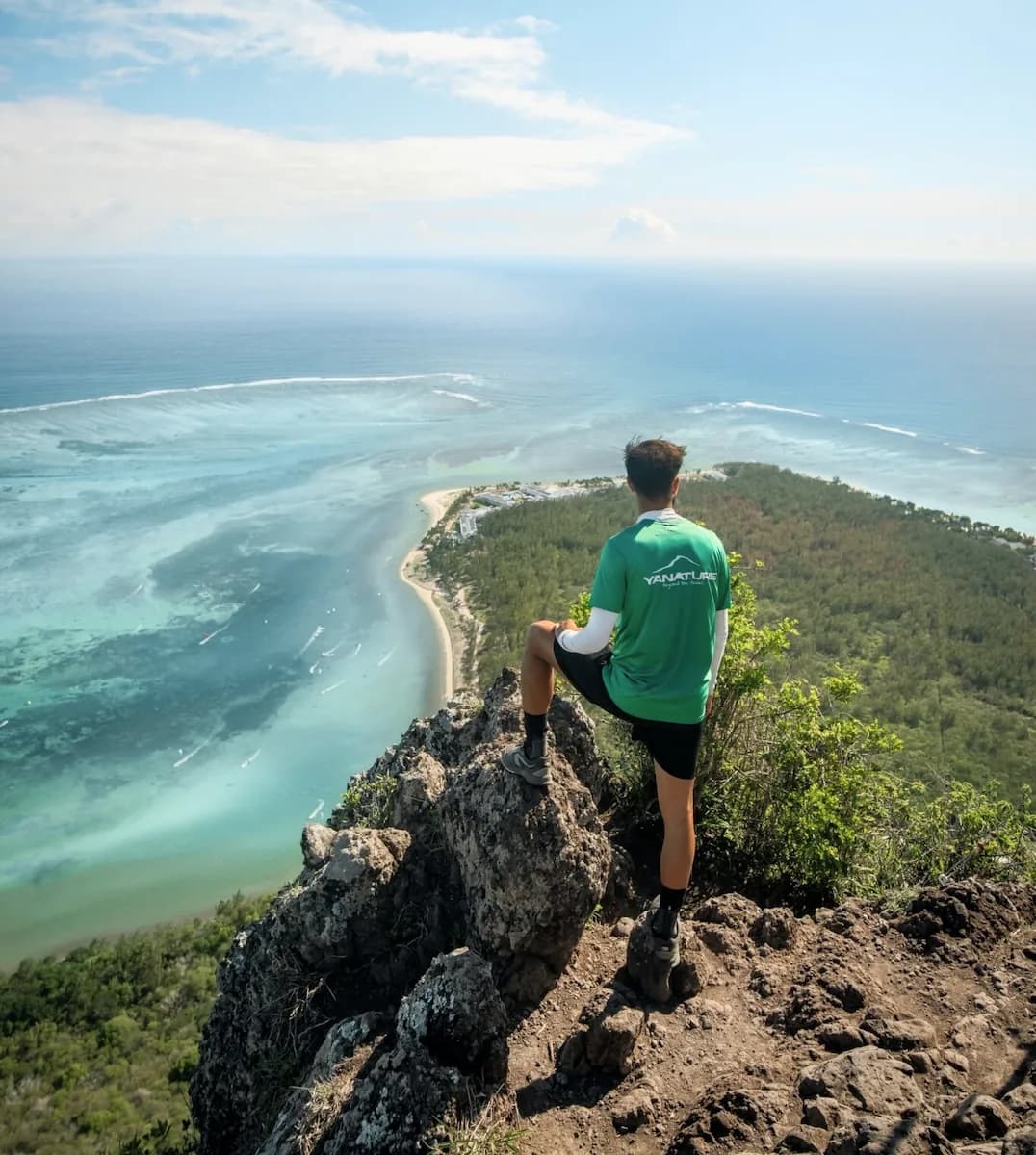
Le Morne is easy to underestimate because the route is not very long compared with big mountain hikes. Difficulty comes from the upper section: steep rock, exposure, heat, wind, and the need to use your hands in places.
For a confident hiker who is comfortable with light scrambling, it may feel moderate to hard. For someone who dislikes heights, loose rock, or exposed terrain, the same section can feel difficult very quickly.
Who Should Avoid Section 2?
Avoid Section 2 if you are under 13, facing rainfall or strong wind, in poor health or fitness, uneasy at altitude, inadequately equipped, unsure about safety, or unfamiliar with the trail.
At the moment, this upper section is accessible only through registered guides. That should make the decision calmer: if the day, the group, or the official access conditions are not right, stop at the lower viewpoints and return the same way.
That list is useful because it moves the question away from ego. The right decision is not whether you can push through. It is whether today, with this weather and this group, the upper trail is a respectful and safe choice.
Difficulty Changes With Weather
Rainfall turns the gulley and rock into a different route. Strong wind changes balance and confidence. Heat can make the climb feel much harder than the distance suggests.
A good Le Morne plan includes a fallback: enjoy Section 1, stop at the viewpoint, visit Trou Chenille or the coastline, or rebook with a guide when conditions are better.
A Quick Self-Assessment Before You Go
Use four questions before committing to the upper route. Are you comfortable using your hands on rock, staying calm beside exposed ground, descending the same steep terrain, and turning back without treating it as failure? A no to any one of these is a good reason to keep the day to the lower viewpoints.
Fitness alone does not answer the difficulty question. Dry rock, reliable footwear, a registered guide for Section 2, and a group that can move at the pace of its least confident person matter just as much as stamina.
Frequently Asked Questions
Is Le Morne Brabant suitable for beginners?
The lower section can suit active beginners in good conditions, but the upper section is not a good place to test your comfort with exposure or scrambling for the first time.
Are sneakers enough for Le Morne?
Athletic shoes with real grip are the minimum. Smooth casual sneakers, sandals, or beach shoes are a poor choice, especially if the rock is damp.
Still unsure?
Read the without-guide guide before deciding how far you want to go and when registered-guide access is needed.